
Melting the ice cube
Issue #21 - Why the frozen zone in production planning must evolve for a modern and volatile world.

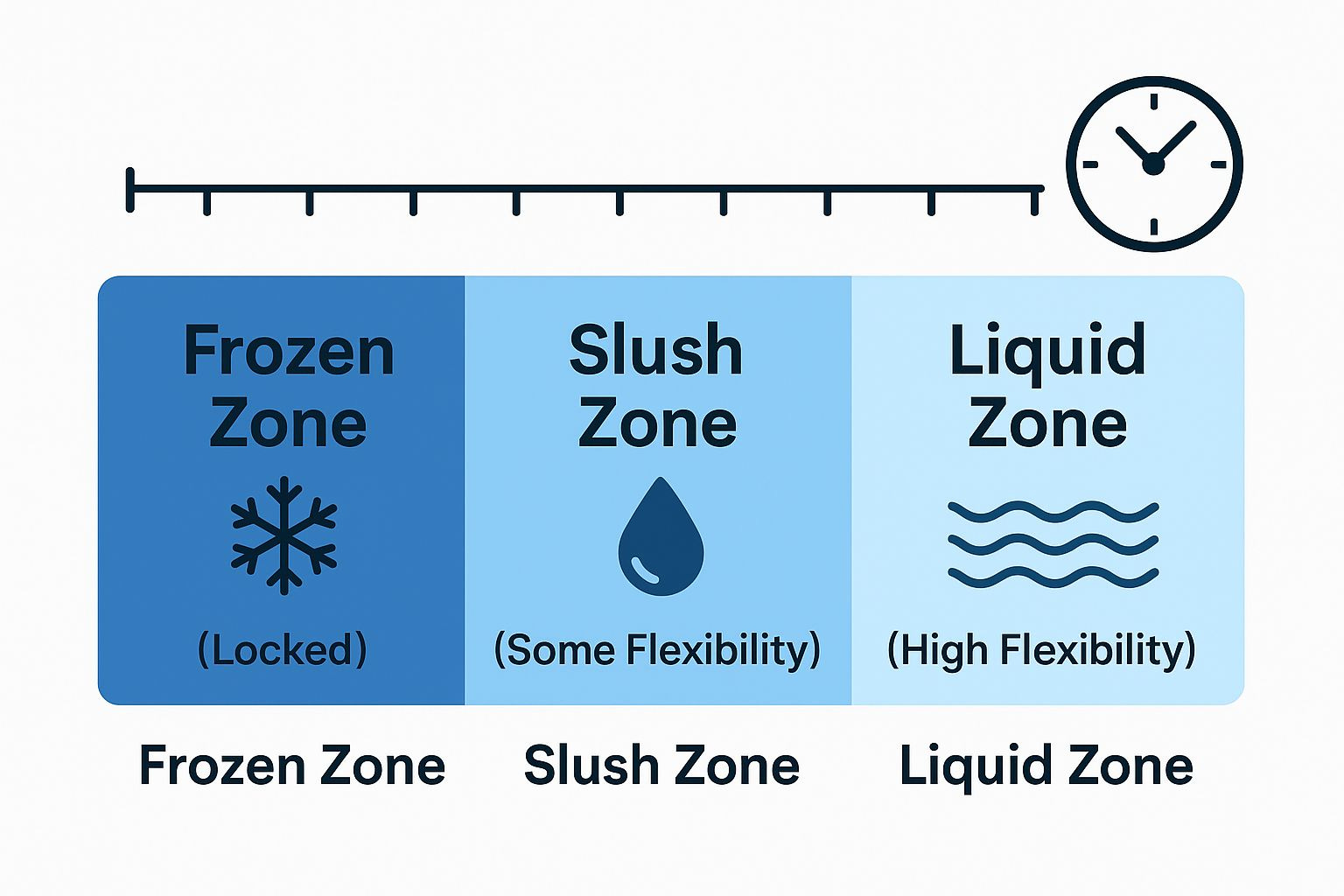
While scrolling through LinkedIn, I came across a time fence framework dividing planning horizons into three zones: liquid (high flexibility), slush (some flexibility), and frozen (no flexibility). It immediately caught my attention.
Should planning ever be frozen in a world where demand and supply can shift in an instant?
That question led me to take a closer look at the frozen zone, its origins, its relevance today, and whether it still belongs in modern planning.
What is the frozen zone?
The Master Production Schedule (MPS) sits at the core of most production planning processes. It determines what, when, and how much to produce based on inputs such as bills of material, inventory levels, and demand forecasts.
In ERP environments, the MPS coordinates production efficiently and helps maximize constrained resources.
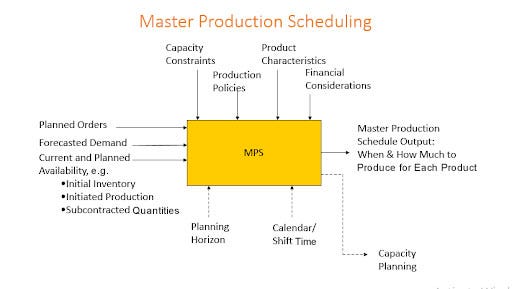
A key characteristic of the MPS is its time frame or planning horizon, often 12 weeks, six months, or even a year depending on the industry. This horizon is divided into time fences: control zones used to manage change and maintain discipline.
The frozen zone is the closest to today’s date and the least flexible. The slush zone sits further out with some flexibility, and the liquid zone is farthest out with the most freedom to adjust.
The ice analogy is practical and intuitive: plans start liquid and easy to reshape. As execution nears, they become slushy, and eventually freeze, mirroring the traditional mindset of maximum flexibility early, maximum rigidity near execution.
💧→🍧 →🧊
Why the frozen zone made sense (historically)
The frozen zone was designed to enforce structure and stability on manufacturing. It protects operations from last-minute changes by blocking automatic plan adjustments and requiring manual interventions, often with management approval.
Its goals: prevent delays, avoid overproduction, and maintain efficiency, especially in batch processes.
In the slush zone, limited changes are allowed, but mismanagement can cause MRP nervousness, instability triggered by frequent, unnecessary updates.
The liquid zone offers maximum flexibility because you are far enough from execution that supplier lead times and stock transfers can still be accommodated. However, even in the liquid zone, resource capacity constraints still apply.
In stable, forecast-driven, push-based supply chains, this model fit the world it was built for. It prioritized predictability and process control.
Times have changed
Today’s world is VUCA: Volatile, Uncertain, Complex, and Ambiguous. High-impact disruptions, rapid demand swings, and growing supply chain complexity have made agility more important than rigidity. And this is the issue: the frozen zone is inherently not agile.
Consider this scenario: You are two weeks from execution, and production is in the frozen zone. A customer representative informs you of a large immediate order triggered by a competitor’s shortage. But because of the frozen period, you cannot adjust the plan automatically. You escalate the request. Discussions go back and forth. Days pass. The customer cancels due to lack of timely confirmation. The plan reverts to its original state, and the opportunity disappears. This is a fictional, but very common, pattern.
This example illustrates why the frozen zone struggles in today’s environment:
Delayed reactions: Sudden demand spikes crawl through approval chains. By the time a decision is made, the window may be gone.
Overreliance on forecasts: Locking in production based on outdated assumptions leads to excess inventory or missed revenue, the opposite of the frozen zone’s purpose.
Rigidity where flexibility is most needed: Ironically, the period closest to execution is now where agility has the highest value.
As Waleed Hammouda said in a previous post: “Agility is measured in minutes.”
That mindset does not fit rigid planning horizons.
![Agility is measured in minutes [Interview w. Waleed Hammouda]](https://substackcdn.com/image/fetch/$s_!bR4B!,w_140,h_140,c_fill,f_webp,q_auto:good,fl_progressive:steep,g_auto/https%3A%2F%2Fsubstack-post-media.s3.amazonaws.com%2Fpublic%2Fimages%2F29bb33ab-66d1-439a-901d-af1852c40efb_811x811.jpeg)
The case against the frozen zone
Here is why the frozen zone increasingly conflicts with modern supply chain realities:
It assumes stability, which is now rare.
It prioritizes approval hierarchies, which may slow decisions that should be fast.
It relies heavily on forecasts, whose accuracy is unreliable.
Even for companies with seemingly predictable environments, frozen zones can lock teams into suboptimal decisions at moments when speed and adaptability matter most.
There is still a place for the frozen zone but it must evolve
The goal is not to create chaos by eliminating the frozen zone entirely. Operational discipline still matters. Plans should not change on a whim.
In my master thesis, one interviewee shared frustration with constantly shifting capacity plans. At that time, plans were built using design capacity, the maximum theoretical output with no losses. This made them unrealistic and overly sensitive to forecast fluctuations.
Every time the “accurate” forecast moved up or down, capacity was changed, creating instability and unnecessary workload, an example of MRP nervousness.
But operational discipline is not the same as rigidity. If an A-level customer places a major order, that signal deserves attention, not bureaucratic delay. Blindly following a frozen zone risks missing opportunities, which is the opposite of supply chain agility.
And we should not assume stability. Disruptions will happen. The difference between chaos and preparedness is mindset: if you expect change and design for it, you are not firefighting, you are ready.
The company I mentioned eventually adapted by planning for realistic capacity, incorporating buffers, and using governance structures that prioritized critical customers and products.
Agility does not mean constant change. It means deliberate change, knowing when to act and doing so with purpose.
The challenge is not to eliminate the frozen zone but to evolve it: make the ice cube capable of melting when needed.
Conclusion
The frozen zone was designed for stability. But in today’s environment, stability is increasingly a luxury. With markets shifting by the hour and disruptions emerging without warning, rigid time fences can do more harm than good.
Instead of freezing plans, organizations should build flexibility into systems, empower planners to make informed decisions, and respond in real time.
In a world where agility is a competitive necessity, it is time to unfreeze our planning mindset and adapt to modern supply chain realities.
If you enjoyed this post and want to support my work:
Have you lived through a supply chain disruption? I am interviewing supply chain professionals for Supply Chain Shift. Please message me if you would like to share your story.
Sources
Inventory Management 101 – The Master Production Schedule (MPS) Explained
Nervousness in MRP: Theoretical Perspectives and Real Manufacturing Case Studies | LinkedIn