
The second-most abundant element is becoming a chokepoint
Issue #27 - What helium reveals about the black dots we choose not to act on

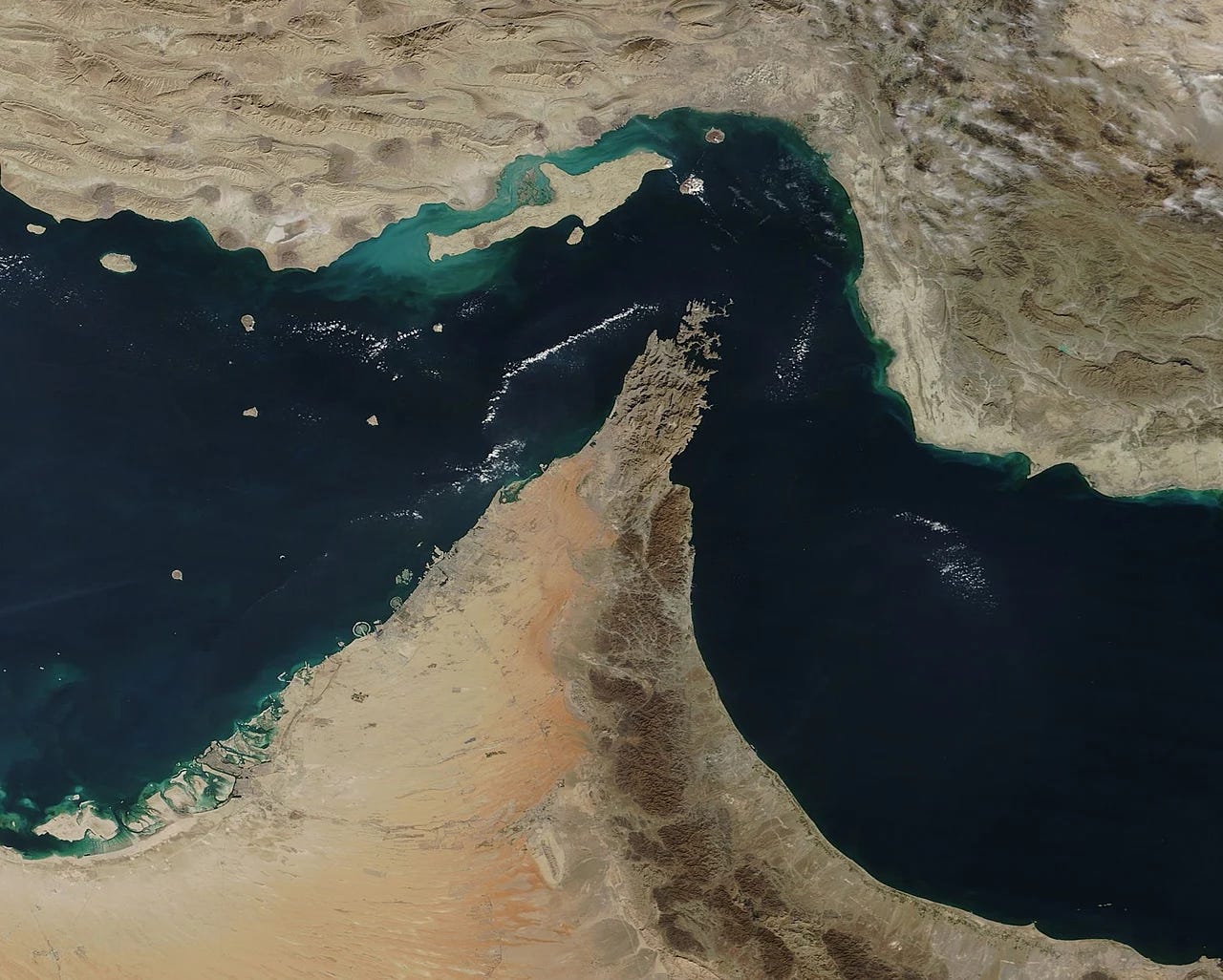
You cannot avoid hearing about the crisis unfolding in the Middle East.
Every headline tracks oil. Tankers. Prices. Exposure.
But very little attention is given to what is not moving through the Strait of Hormuz.
Not oil.
Helium.
An invisible input, rarely discussed, yet just as capable of constraining the global economy if disrupted.
Helium is not optional in semiconductor manufacturing. It is used in cooling, lithography, vacuum stability, and leak detection. Remove it, even briefly, and advanced chip production does not slow down. It stops.
And yet, the constraint is not geological.
Helium is abundant.
What is scarce is the ability to extract, refine, and transport it at the purity required for semiconductor production. Around 30 percent of global supply is tied to Qatar, linked to liquefied natural gas infrastructure and dependent on stable shipping routes through a geopolitically fragile region.
So the bottleneck is not natural availability.
It is industrial capability, infrastructure, and geography.
A constraint hiding in plain sight.
Helium is rarely discussed. The focus tends to remain on chips, fabs, and capacity expansion. But increasingly, it is upstream materials like helium and specialty gases that define the limits of the system.
The constraint has moved.
But our attention has not.
This is not a new pattern.
I have seen it before.
Back in 2022, during a project at a semiconductor company, someone from the Business Intelligence team called me over to look at a map.
It was a satellite image of Odesa in Ukraine. Red dots were scattered across the city, marking sites of shelling and air strikes.
And then there was one black dot.
A single, almost invisible point on the map.
That dot was Cryoin. A small, relatively unknown supplier. But also one of only two Ukrainian companies, alongside Ingas, responsible for nearly half of the world’s semiconductor-grade neon (at that time)
Neon that feeds the lasers used to engrave chips.
Chips that power everything from phones to ventilators to fighter jets.
The modern digital world runs on these chips.
And without neon, no chips.
There it was.
One black dot, surrounded by red explosions.
I remember staring at the screen and thinking:
What if that black dot was hit?
What happens when a tiny, quiet node halfway across the world goes dark?
What happens to the chips?
To factories?
To entire industries built on top of them?
And maybe the more uncomfortable question:
Would we even be able to respond fast enough?
That moment was not really about neon.
It was about realizing how little of the system is visible when it matters most.
Every supply chain hides at least one black dot.
A point where material dependency, industrial capability, and geopolitical exposure intersect.
Some are hard to see.
Some are known.
All of them are easy to ignore until they become binding.
Helium is one of those points.
And the uncomfortable part is this:
It is not clear whether this constraint was invisible, or simply inconvenient.
The dependency on helium has existed for years. The concentration of supply, the reliance on specific regions, the long lead times for new capacity. None of this is new information.
But acting on it early would have been costly.
Difficult to justify.
Easy to postpone.
So the system optimized elsewhere.
And like many constraints, it remained theoretical until it began to tighten.
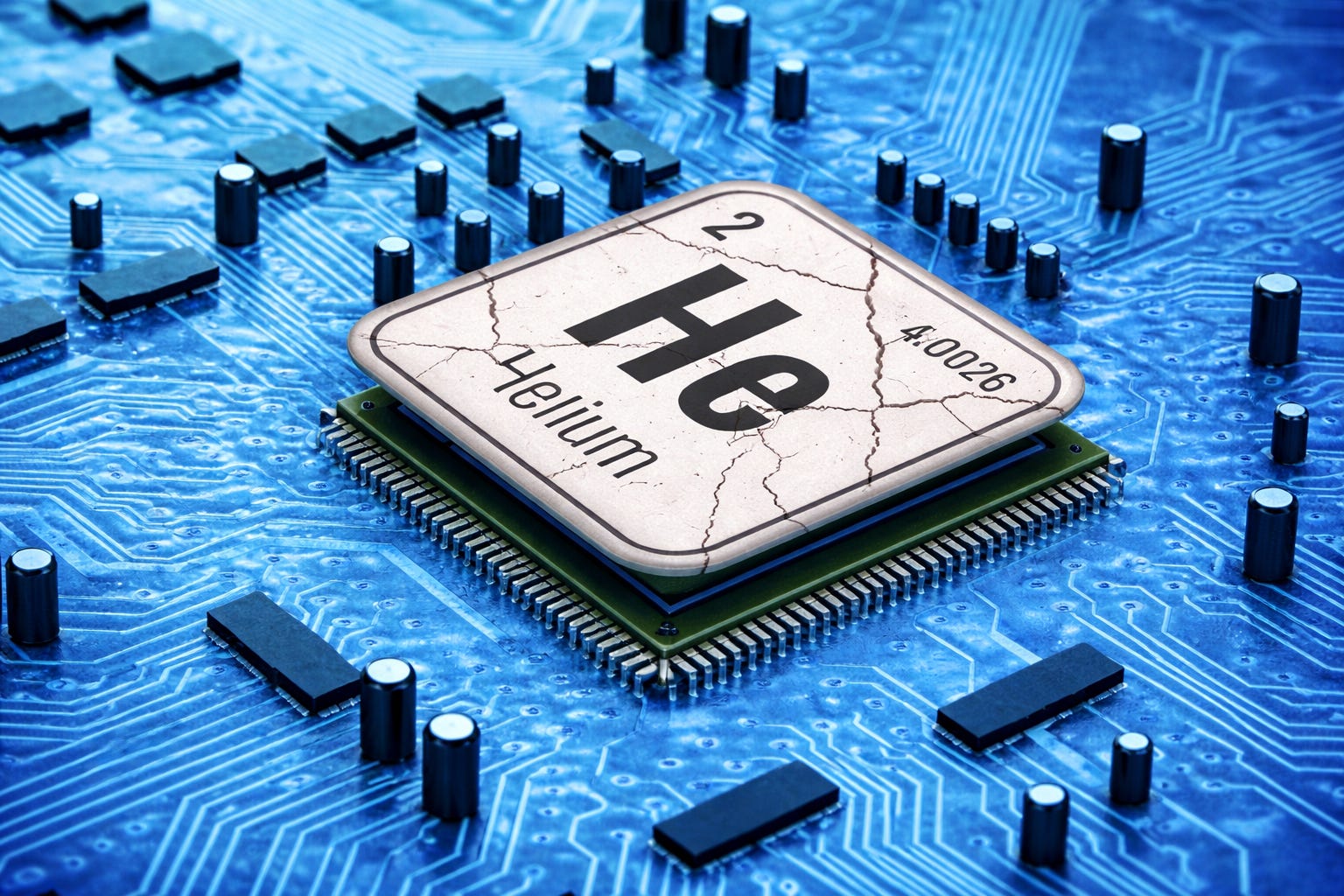
Now, in 2026, helium is emerging as a strategic chokepoint in the semiconductor ecosystem. Not because it suddenly became important, but because the conditions around it changed.
Geopolitics shifted.
Routes became uncertain.
And a quiet dependency became an active constraint.
This is where the idea of black dots becomes less about visibility and more about decision-making.
Because the challenge is not only to identify them.
It is to decide what to do about them before they fail.
And that raises a more difficult question.
If every supply chain contains black dots, and many of them are economically irrational to fix before they break, what does anticipation actually mean in practice?
Is it about mapping deeper?
Investing earlier?
Accepting higher costs for resilience that may never be used?
Or is it about something less tangible.
The ability to recognize when a constraint is no longer theoretical, but about to become real.
And to act before the system forces you to.
Because by the time a black dot becomes visible to everyone, the window to respond has usually already closed.
If you enjoyed this post and want to support my work:
Have you lived through a supply chain disruption? I am interviewing supply chain professionals for Supply Chain Shift. Please message me if you would like to share your story.
Sources
Read "Selling the Nation's Helium Reserve" at NAP.edu
Iran war cuts off helium from Qatar, and shortages will start to bite in a few weeks | Fortune